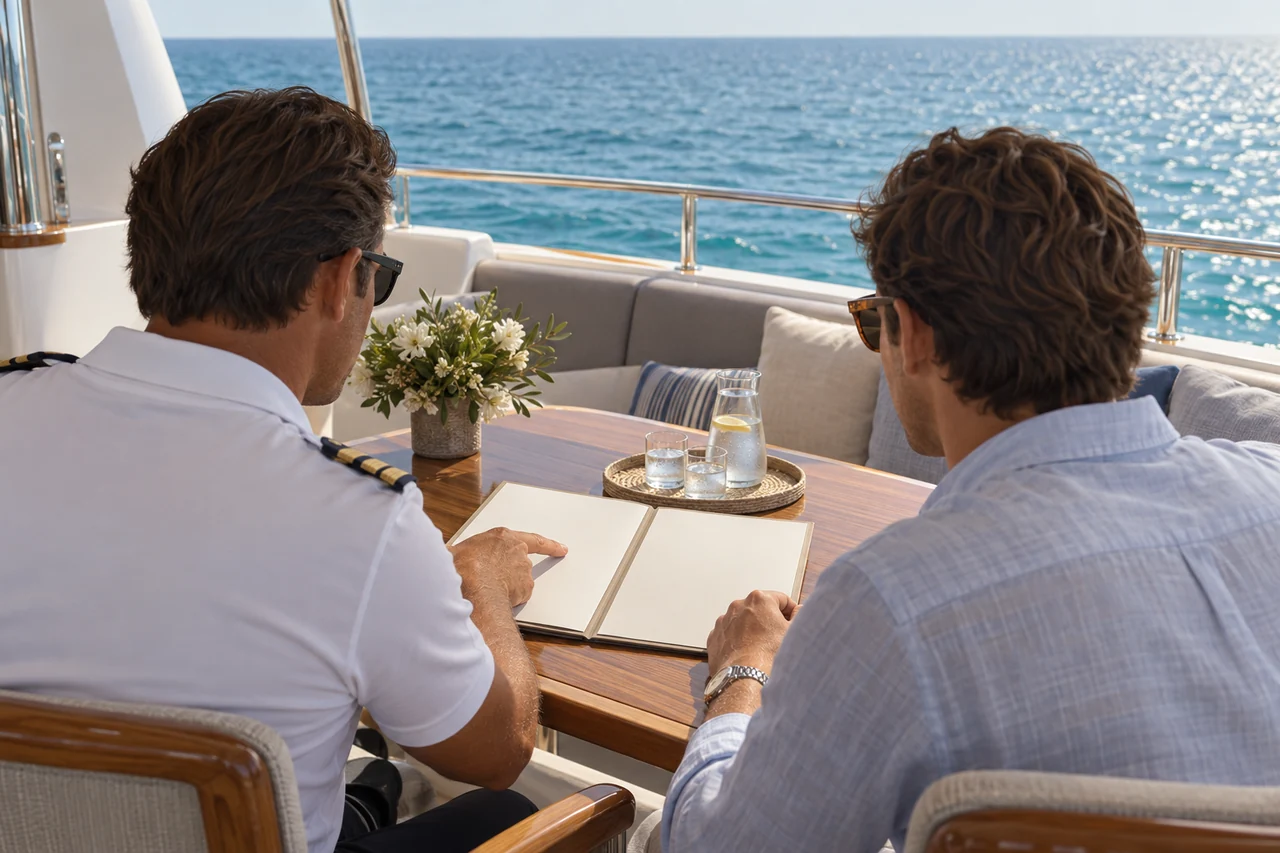
1. Send your enquiry
Leave your name, email and phone number in the short enquiry form. If a yacht has caught your eye, open the form from its page so the selection travels with your request. Dates, guests and a message are useful if you know them; you can discuss the rest with us.
Mention any requirement that will decide the choice, such as suitable boarding access, nights aboard or a fixed return time. You can compare different yachts or departure areas before committing to a full plan.
2. Review the proposal
Read the offered yacht’s specification and photographs alongside the charter period and departure point. Check the seating and cabin layout, not just the maximum guest figure. Ask whether the proposed route leaves enough time for the activities you named.
Compare the quoted amount with its stated inclusions. Crew, fuel, catering, berthing, transfers and other expenses can be treated differently across charters. Any extra you want should appear clearly in the proposal or its accompanying terms.
3. Agree the terms
Before committing, check who provides the charter, payment deadlines, cancellation conditions and the approach to weather or a captain’s operational decision. Resolve questions about deposits, additional expenses and a change of dates in writing.
A sample itinerary remains subject to practical conditions. Make sure the terms distinguish a route adjustment from a cancellation, and ask how any alternative departure would be agreed.
4. Complete the booking
Follow the required agreement and payment steps, then retain the written confirmation. The enquiry and proposal alone are not booking confirmation. Use the final instructions to check the boarding location, arrival time, guest information and what to bring.
If your party changes after confirmation, send the update through the same enquiry. An additional guest, extra service or new departure time needs agreement for the chosen yacht.
Compare two offers on the same brief
Put the named yacht, date, departure, hours and guests side by side before comparing price. Then look at the services you requested. One offer may include a meal while another only covers the boat. One may begin at a different marina. Those differences matter even if the headline amounts are close.
Mark any item that is still provisional: a photographer, an outside caterer or a preferred route, for example. Ask whether it has been priced and confirmed, or whether it is simply recorded as a request. A complete comparison separates what has been agreed from what remains open.
Before paying for other arrangements
A restaurant reservation, guest transfer or cake delivery can depend on the yacht’s timings and berth. Coordinate those purchases with the details in the charter proposal. If a service comes from another supplier, check its change and cancellation terms separately; the yacht agreement may not cover that supplier’s charges.
Keep the final proposal, agreement, payment instructions and confirmation together. If you receive revised details, check which document they replace. For a changed yacht, review the actual vessel again rather than assuming the original layout, equipment and guest arrangements carry over.